

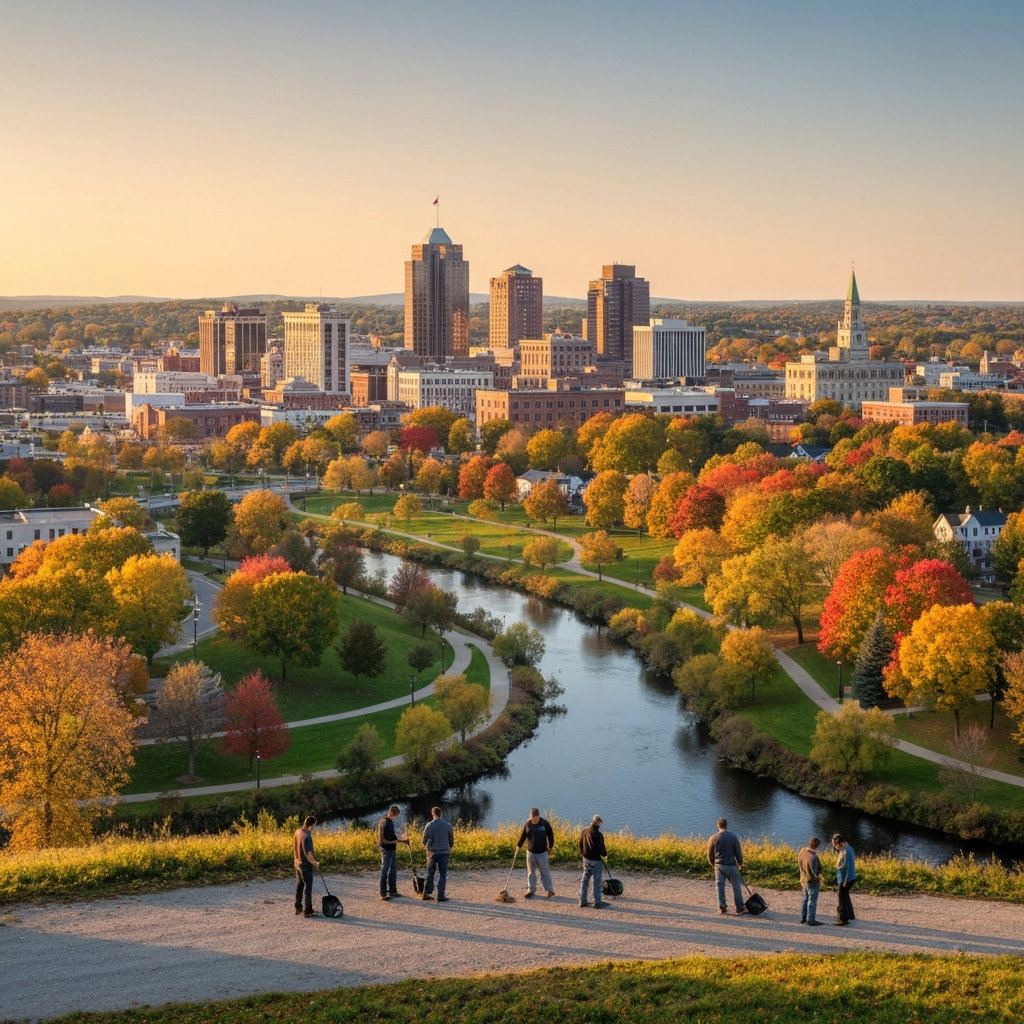
Manchester, New Hampshire, experiences a humid continental climate characterized by distinct seasons, each offering unique weather patterns and opportunities for residents.
Seasonal Overview
Winter
Winters are cold and snowy, with average low temperatures around 16°F (-9°C) in January. Snowfall is common, contributing to the city’s picturesque winter landscape. Residents should prepare for freezing temperatures and occasional snowstorms during this season.
Spring
Spring brings milder temperatures, with average highs reaching 57°F (14°C) in April. This season is marked by increased rainfall, averaging 3.5 inches (89 mm) per month, fostering the blooming of local flora and the greening of the city.
Summer
Summers are warm and humid, with average high temperatures peaking at 83°F (28°C) in July. The city enjoys approximately 195 sunny days annually, making it ideal for outdoor activities. However, occasional heatwaves and thunderstorms can occur, so staying hydrated and informed about weather forecasts is advisable.
Autumn
Autumn features cooler temperatures and vibrant foliage, with average highs around 62°F (17°C) in October. This season is also the wettest, averaging 4.1 inches (104 mm) of precipitation, often enhancing the beauty of the fall colors.
Environmental Initiatives
Manchester is committed to environmental stewardship through various programs:
Urban Ponds Restoration Program
Established in 2000, this program focuses on evaluating and restoring local water bodies to improve water quality and provide recreational opportunities for residents. Efforts include monitoring, cleanup events, and habitat restoration projects.
Conservation Commission
Formed in 1989, the Manchester Conservation Commission works to preserve the city’s natural resources. Responsibilities include advising on wetland disturbances, cataloging natural resources, acquiring land for conservation, and promoting environmental education and cleanups.
Waste Management and Recycling
The city’s Solid Waste and Environmental Programming (SWEP) provides curbside pickup services for trash and recycling, manages a drop-off facility, and coordinates hazardous waste collection events. Annually, Manchester disposes of approximately 40,000 tons of trash and 8,000 tons of recyclables, emphasizing the importance of waste reduction and recycling among residents.
Understanding Manchester’s climate and participating in local environmental initiatives can enhance residents’ quality of life and contribute to the city’s sustainability efforts. Staying informed about seasonal changes and engaging in community programs allows individuals to make the most of what Manchester has to offer year-round.