

Manchester, New Hampshire, is actively engaging in environmental initiatives to enhance sustainability and community well-being. These efforts encompass various programs and projects aimed at preserving natural resources, improving public health, and fostering environmental education.
Urban Forestry and Green Spaces
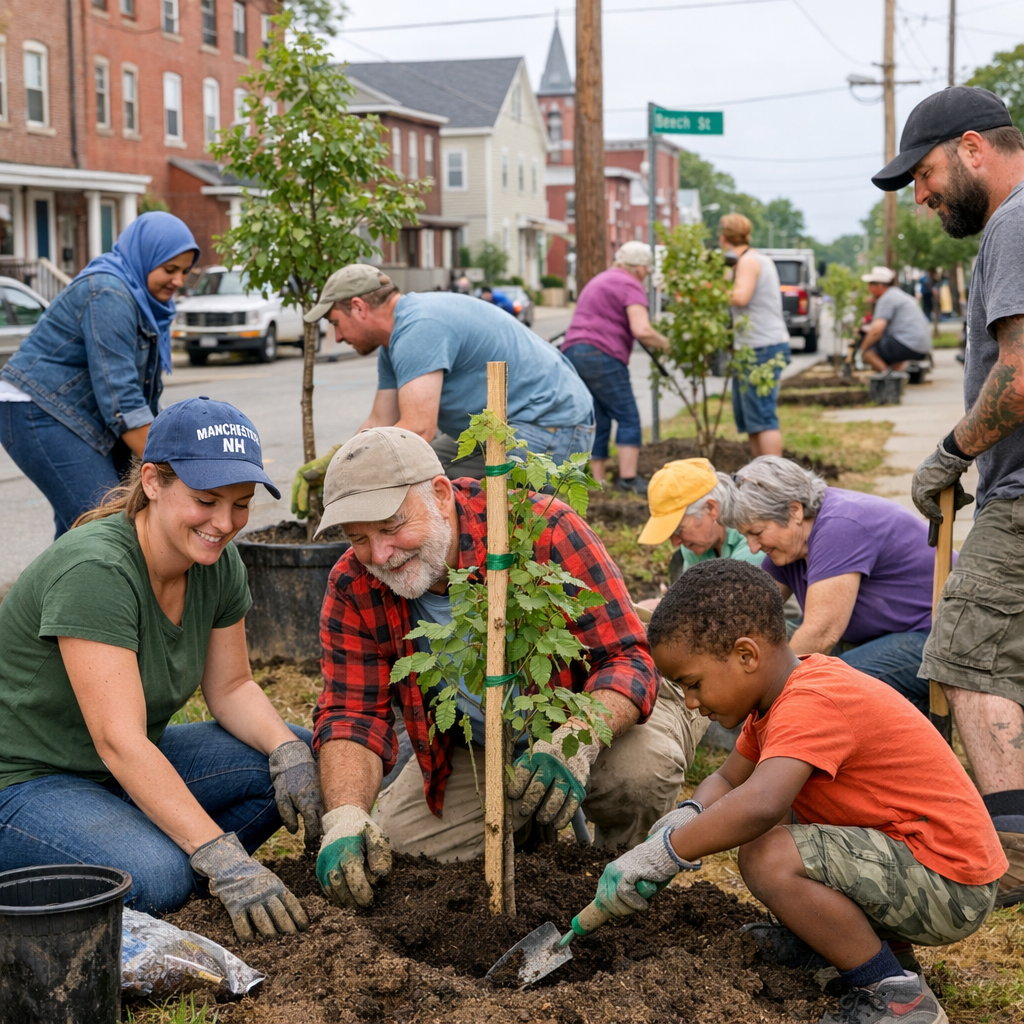
Recognizing the importance of urban greenery, Manchester has launched an Urban Forestry program to address tree inequities and mitigate heat islands in low-income neighborhoods. This initiative involves residents in planting trees and creating green spaces, with the ‘Tree Ambassador’ program providing workforce development opportunities in urban forestry.
Environmental Health and Safety
The city’s Environmental Health Branch is dedicated to identifying and controlling environmental conditions that may affect the health of residents, workers, and visitors. Their responsibilities include inspecting licensed facilities, investigating environmental health complaints, monitoring water quality, and collaborating with other departments and agencies to address environmental health issues.
Conservation Efforts
Since its formation in 1989, the Manchester Conservation Commission has worked to preserve the city’s natural resources. Their responsibilities include advising on applications to disturb wetlands, cataloging and planning for the protection of natural resources, acquiring land for conservation, promoting conservation activities, and advising city boards on environmental impacts of development.
Waste Management and Recycling
The Solid Waste and Environmental Programming (SWEP) division provides curbside pickup services for trash and recycling, maintains the city’s Drop Off Facility, manages contracts for solid waste and recyclable materials, oversees landfill monitoring, and coordinates events for the collection of household hazardous waste. SWEP also offers bulky-item pickup services and a blue bag litter collection program to maintain neighborhood cleanliness.
Water Quality Improvement
In a settlement with the U.S. Environmental Protection Agency and the State of New Hampshire, Manchester has agreed to implement a comprehensive set of corrective measures and improvements to the city’s sewer system. These efforts aim to significantly reduce sewage overflows into the Merrimack River, enhancing water quality and public health.
Environmental Education
Southern New Hampshire University (SNHU) has established outdoor classrooms at three Manchester public schools: Southside and Hillside Middle Schools and Webster Elementary School. This initiative provides students with outdoor learning spaces equipped with environmental sensors, fostering hands-on environmental education and connecting students to the SNHU Arboretum.
These initiatives reflect Manchester’s commitment to environmental stewardship and community engagement, contributing to a healthier and more sustainable city for all residents.